5/4/16

Audubon Naturalist Classes

Children are born naturalists. The Audubon Naturalist Society builds on children's inherent curiosity about the world by using hands-on, nature-based activities to foster social, physical, and academic skill development. Our Fresh Air Kids Class is for children ages 5 and younger along with a parent or caregiver. Classes might involve crafts, songs, books and always a hike. Bring your lunch or snack. Mingle and meet other caregivers!
Algonkian Regional Park, Sterling, VA
Time: 10-11:00 AM)
Session 2
Four weeks: May 2- May 23, 2016
Cost: $50 (Siblings 21 months and older $40)
*siblings under 21 months free for all programs

To register please email Susanne Ortmann at susanne.ortmann@anshome.org  Reservations not confirmed until payment received (checks only). Please mail checks made payable to ANS to Rust Sanctuary, 802 Children’s Center Rd., Leesburg, VA 20175. Offered in partnership with NOVA Parks.

5/3/16

Summer Programs at the Academy of Russian Ballet 2016


Review: Kwik Stix

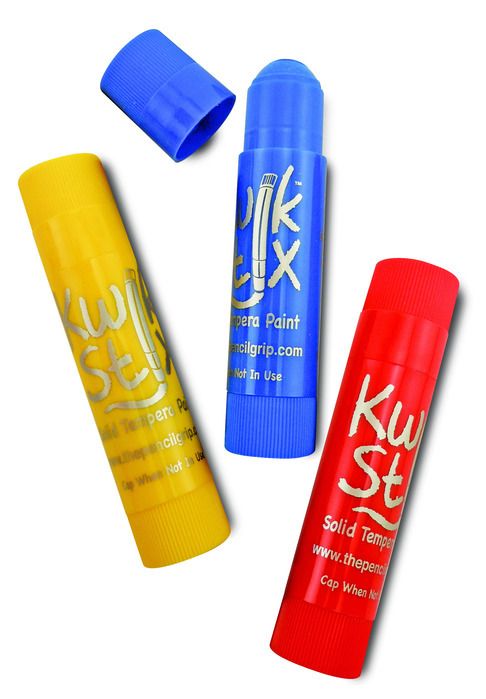
One of the things that keeps us from doing art is the cleanup- but with Kwik Stix 12 pk from The Pencil Grip, Inc. there's no mess to clean! We were given a 12 pack of Kwik Stix to try, along with a Single Grip, which we haven't tried yet.  What did we do with our Kwik Stix? Well let me show you!

Kwik Stix The Pencil Grip, Inc. Review
Normally I'm not a big fan of art, so I make sure we get in our hours with camps, classes, and during December.  Our coop goes on break and so I use the extra time to fit in lots of art projects, but my kids really love art, so I was happy to give them an unexpected "Art Morning".  We listened to some classical music and did two projects, which were both a lot of fun, although neither one was specifically a "tempera" project when I found it.  Kwik Stix are fast-drying, so they're paint (Tempera paint, specifically), but they're dry in 90 seconds or less, which means you're not sitting around waiting for paint to dry!
Kwik Stix The Pencil Grip, Inc. Review
First we did some bubble paintings.  We used black paper and the white Kwik Stix to trace around circles we made using different objects in our house.
 Next we used the various other colors included in our 12 pack to add the rainbow effects you see when you blow bubbles, leaving lots of black space so they still looked transparent.  My daughter really liked this project (age 8) and made two.

 Some of us even got creative and added some popped bubbles.  The original of this project called for oil pastels, but I wanted to see how the coverage was on black paper, and I think that the Kwik Stix did a fantastic job! I was really impressed with the white paint on black paper.
 Next we decided to go for something a little more classically inspired.  We read a little about Monet and decided to make some Monet-inspired dot art to go in my husband's new office.  He has a new 6-cabinet filing system, and so he was in the market for some new kid-art anyway!   We used canvases from a craft store, and the kids marked lightly with pencil to show where their water would be and where their flora would go.  I think these turned out really beautifully!! Again, we didn't follow the original directions I found, which had you use painters tape to mark off the bridge- instead we just let our background dry (it's only 90 seconds!) and then used the white to draw on our bridges, and it did a great job! The Kwik Stix are round, so they lent themselves nicely to impressionism, although they also did a great job drawing lines on our bubbles!
 The 8 year old's painting (and the 8 year old)
 The 12 year old's painting (He really likes art and enjoyed this very much.  He was also happy with how the colors blended- he was dubious about how this would work out with "quick drying paint" since he likes to blend his shades- but he was quite pleased with his final product).
And the 10 year old's painting.  He does not like art, was not thrilled that we were doing two projects, but I think that his turned out lovely, as well.  I'm not sure you can really see them, but I like his lily pads with pink flowers :)

We really enjoyed making art with our Kwik Stix, and I especially like having the option for the kids to grab them and paint without me having to worry about spills or messes.  They really make painting no more difficult or messy than using markers or crayons.  These would be a great buy for summer fun, and we hope that you'll try them out, too!


Kwik Stix The Pencil Grip, Inc. Review
Crew Disclaimer

4/27/16

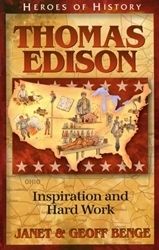
Review: Heroes of History- Thomas Edison

We have really learned to enjoy biographies over the years, and so we were thrilled to be able to review Heroes of History - Thomas Edison with its Digital Unit Study from YWAM Publishing.
Christian Heroes {YWAM Publishing Review}
This fantastic series includes several prominent historical figures including Abraham Lincoln, Ben Carson, John Smith, Christopher Columbus, Harriet Tubman, Lewis and Clark, and more.  We've actually enjoyed reading other titles from this publisher's Christian Heroes series, including George Muller, who was a particular favorite.  
 Heroes of History focuses on 27 (currently) men and women who have shaped our history as presidents, inventors, writers, explorers, scientists, etc.  Ages 10 and up should be able to comfortably read these books independently- but younger children will enjoy you reading aloud. We opted to use this book as a read aloud and then I had my sons complete some of the Digital Study Guide while my daughter (age 8) just enjoyed the story. 
The Thomas Edison book we received is 200 pages long, and my children really enjoyed the background on Edison, whose teachers believed he was "addled" but went on to hold over 1300 patents in his lifetime. I think Edison's story is a great one of perseverance for any child, but if you have a child who is struggling in school or with general anxiety about their intelligence, they might especially enjoy hearing about how Edison's mother never gave up on him and how he overcame his early struggles with education. 
Each book in the Heroes of History has a digital study guide, which makes reading comprehension really easy to do.  The activities in the digital study guide include Key Quotes (we didn't memorize these, but we did enjoy them), Chapter Questions (vocab, facts, etc) which we did aloud after each chapter, Display Corner (ideas for making a collection of stuff, we didn't do this), Student Explorations (essay questions, art projects, etc), Community Links (places you can visit or people to talk to related to your hero), Related Themes to Explore (current events, other reading in various subjects your student can do based on their enjoyment of the book you're working on), a Culminating Event (idea for the end of your study) and a Social Studies section.  The Social Studies portion was my favorite.  It included 5 different portions, Terms/Vocab, Places, Geography of New Jersey, Timeline, and research questions.  I think just doing this section would give your child/student a great depth of knowledge based on the book, and I really enjoyed how it included a lot of ideas from various subjects that we study.  You can use the questions in any section orally, as we did with the comprehension questions, or you can print out anything you'd like.  There is an answer key, which is always helpful if you've got children doing the study on their own.  
We really enjoyed this particular book about Thomas Edison and found him to be a great source of inspiration.  We also really enjoyed having the Digital Study Guide to go along with the book.  I think it would be really helpful if you had a large report due about an historical figure, as well, since the related themes section gives you a wealth of other resources to explore and there are some fun project ideas in the Student Explorations.  We've enjoyed each book that we read from this series so far, including Thomas Edison, and recommend them highly for you and your kids. 
Christian Heroes {YWAM Publishing Review}
Crew Disclaimer

Early Language at PWA


At Prince William Academy we believe that in the global world in which our children are growing up, it is crucial to provide them with the skills that they will need to take an active and responsible role in the world.

By living and going to school in a region rich with cultural opportunities, our students have the chance to access vibrant cosmopolitan cities in which visitors from many countries interact, share their cultures and participate in discussion and policy development.

By offering children early exposure to a diverse array of cultural experiences and instruction in other languages, our goal is that PWA students will broaden their horizons, gain stronger commitments to their own cultural heritages, and be ready to play an active role in a global future.

At PWA we believe that it is crucial for all children to have the opportunity to gain fluency in more than one language and culture. Not only does language learning support academic achievement and provide cognitive benefits to students, it affects attitudes and beliefs about language learning and provides entry to other cultures.  Beginning at age two, our students study Spanish each day in addition to a world language selected by their parents.  This year we are offering Mandarin, Arabic, and French.  Our goal will be to introduce Farsi and Urdu in the future as our school community needs dictate.

There is a large body of research demonstrating that language learning provides students with academic advantages.[1]  The American Council of Teaching Foreign Language (ACTFL) has compiled an extensive body of research on the benefits of dual-language instruction programs. The research, grounded in historical context and current literature, notes that students who learn a second language have increased student achievement results compared to peers, improved cognitive skills, and overall positive attitudes for other cultures.

Counter-intuitively perhaps, it is clear that time spent learning a second language bolsters the learning of the first language too, as students, especially young children, develop cognitive tools that allow them to apply lessons from one language directly to the second.  To achieve bi-literacy and ensure competence in cross-cultural communication, Prince William Academy aims to instruct students in the two languages beginning at age two, making the most of the innate ability of young children to learn language, and contributing to their increased cognitive skills and higher achievement in other academic areas.[2]  Our effort from preschool through eighth grade promotes bi-literacy, grade-level academic achievement, and positive cross-cultural attitudes and behaviors in all students.[3]

A growing body of research indicates that language instruction provides multiple advantages to students, including:

·       Students achieve well above grade level, even years after their participation.
·       Students become proficient in another language and develop deeper cultural awareness.
·       Non-native English speakers and native English speakers in instruction programs perform as well as or better than their peers educated in other types of programs.  For example, both native Spanish speakers and native English speakers in instruction programs perform better than their peers both on English standardized achievement tests and Spanish standardized achievement tests.

There is also evidence that early language learning improves cognitive abilities and that bilingualism correlates with increased cognitive development and abilities.[4] There is also a correlation between bilingualism and attentional control on cognitive tasks. Furthermore, a correlation between bilingualism and intelligence and between bilingualism and meta-linguistic skills, memory skills, problem solving ability and improved verbal and spatial abilities exists.[5]

Culture is an integral part of language learning, as the language provides a window into that culture and offers students the opportunity to engage actively with it. Research demonstrates that learning a target language helps young children develop positive attitudes to that language and the people who speak it.[6]   At Prince William Academy, students view second language learning and the insights gained into another culture as a normal part of their schooling.  

At Prince William Academy, language acquisition is not just about learning a new language or being able to communicate with another person in a different language.  Cultural understanding and an ability to compete globally is what drives our intensive language studies and compliment our robust curriculum.


Learn more about our friends at Prince William Academy here.  PWA is an advertiser on PwcMoms.com.


Armstrong, P. W., & Rogers, J. D. (1997). Basic skills revisited: The effects of foreign language instruction on reading, math, and language arts. Learning Languages, 2(3), 20-31
Johnson, C. E., Flores, J. S., & Eillson, F. P. (1963). The effect of foreign language instruction on basic learning in elementary schools: A second report. The Modern Language Journal, 47(1), 8-11.
Turnbull, M., Hart, D., & Lapkin, S. (2003). Grade 6 French instruction students’ performance on large-sclar reading, writing, and mathematics tests: Building explanations.  AlbertaJournal of Educational Research, 49(1), 6-23. From PsychINFO database.
[2] Stewart, J.H., Foreign Language Study in Elementary Schools: Benefits and Implications for Achievement in Early Childhood, Education Journal, 2005, 33(1), pp. 11-16.
[3] Dual Language Education of New Mexico, available at http://www.dlenm.org/archive/2007/dlenm/101.html.
[4] Foster, K. M., & Reeves, C. K. (1989). Foreign Language in the Elementary School (FLES) improves cognitive skills. FLES News, 2(3), 4.
[5] Bamford, K. W., & Mizokawa, D. T. (1991). Additive-bilingual (instruction) education: Cognitive and language development. Language Learning, 41(3), 413-429. From ERIC database.
[6] Bamford, K. W., & Mizokawa, D. T. (1989). Cognitive and attitudinal outcomes of an additive-bilingual program. U.S.; Washington:  ED305826
[6] Morgan, C. (1993) ‘Attitude change and foreign language culture learning’ in Language Teaching, 26 (2), pp. 63-75.

Summer Bowling Options


The popular website "Kids Bowl Free" offers free games of bowling all summer long for your registered children.  There aren't any bowling centers near us that participate, but if you know the kids are going to be spending some time at Grammy's house or with the cousins, you can check to see if the bowling center near them is participating.


The AMF Summer Games program isn't completely free, but for just $4.95, kids ages 15 and under can bowl three games per day all summer long.  Add an adult summer games pass for $14.95 and you can bowl with your kids, too.  

For either program, make sure that you sign up online before summer begins and passes run out.

4/18/16

In Summmmmmerrrrrrrrr

We are excited about Summer....and all things warm and hot.....and laying on the beach.

Just like Olaf.

And speaking of Olaf, well, that reminds us of our super fun Frozen Dance Camps that we've hosted for you guys at Showcase Dance Studio.  And they've got fun summer camps, too! Check it out!